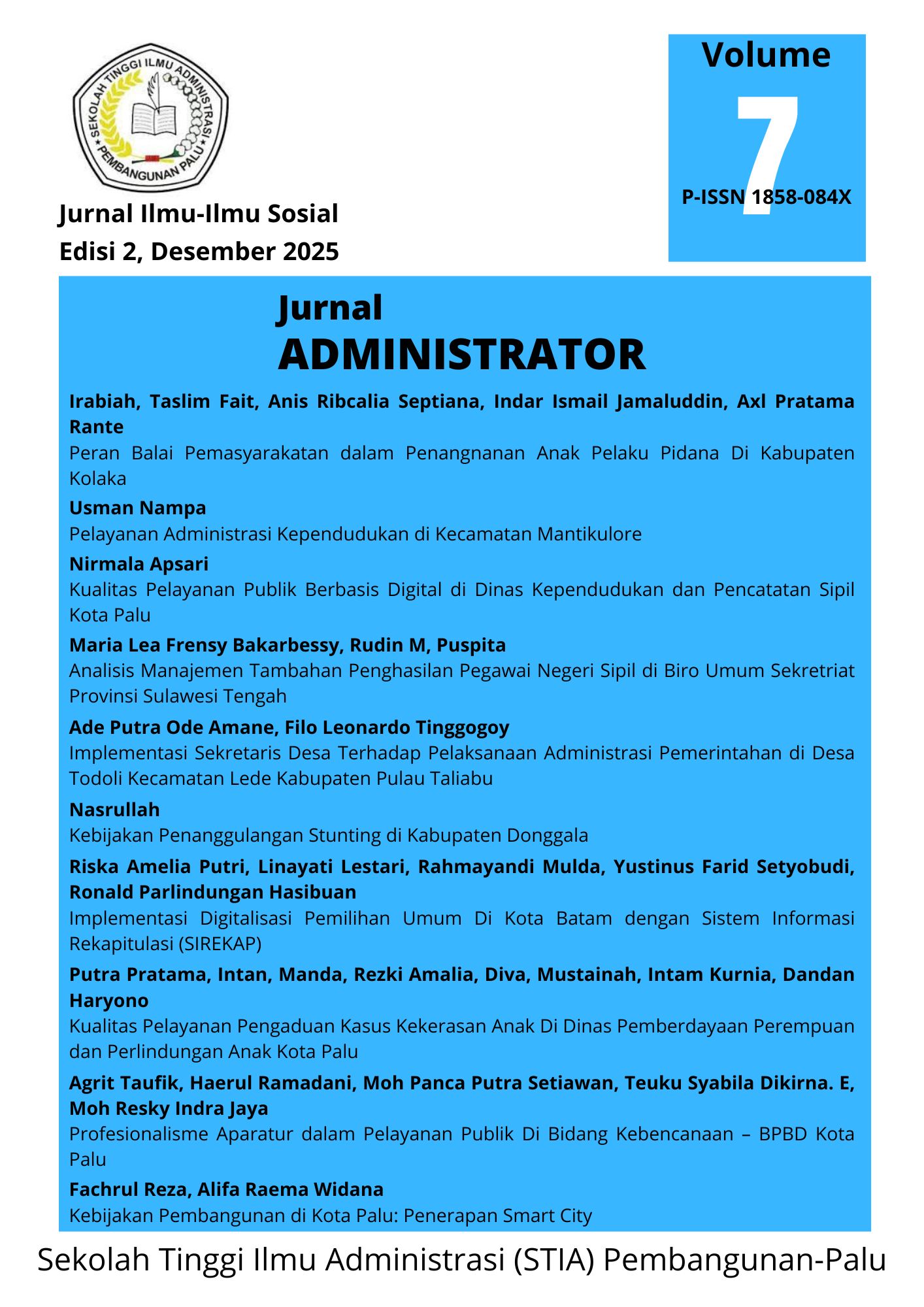
Kebijakan Pembangunan di Kota Palu: Penerapan Smart City
DOI:
https://doi.org/10.55100/administrator.v7i2.114Keywords:
Public Policy, Development, Smart City, Information TechnologyAbstract
The implementation of the smart city concept in Indonesia is one strategy for sustainable development and optimal public services. Palu City, as a developing city in Central Sulawesi, has begun adopting smart city policies to improve the quality of life of its citizens. This article discusses the background, research methods, implementation, challenges, and recommendations related to development policies in Palu City: smart city implementation using a descriptive qualitative approach and interactive model analysis. This research is based on national literature and policy sources, as well as the results of studies related to smart city implementation in various cities in Indonesia
References
Adi, S., Yulianto, F., & Winardi, R. (2020). "Pemulihan Kota Pasca Bencana dan Penerapan Konsep Smart City". Jurnal Perencanaan Wilayah dan Kota.
Bappenas. (2018). Gerakan Menuju 100 Smart City. http://smartcity.bappenas.go.id
Kementerian Komunikasi dan Informatika RI. (2019). "Laporan Tahunan Smart City Indonesia". www.kominfo.go.id
Kurniawan, D., Rahman, H., & Anwar, C. (2021). "Mitigasi Bencana Berbasis Teknologi Informasi: Studi Kasus Kota Palu". Prosiding Nasional Teknologi Informasi.
Miles, M. B., Huberman, A. M., & Saldana, J. (2014). Qualitative Data Analysis: A Methods Sourcebook. Sage Publications.
Pemerintah Kota Palu. (2022). "Laporan Implementasi Smart City Palu".
Setiadi, H., & Prabawani, B. (2020). "Peran Teknologi Informasi dalam Mewujudkan Smart City di Indonesia". Jurnal Ilmu Administrasi Publik.
Zon, M. F., & Budiawan, R. (2022). "Literasi Digital dan Tantangannya di Daerah Perkotaan". Jurnal Komunikasi Indonesia.
Downloads
Published
Issue
Section
License
Copyright (c) 2025 Fachrul Reza, Alifa Raema Widana (Author)

This work is licensed under a Creative Commons Attribution-NonCommercial 4.0 International License.